

Symptoms of a Stye: What to Watch For in Your Eye
At Aesthetic Eye & Surgical Arts in Sarasota, Dr. Paul Brannon, M.D., specializes in diagnosing and treating styes, which are often characterized by swelling, redness, and pain near the eyelid. Understanding these common symptoms can help you seek timely treatment, preventing further irritation or complications. Dr. Brannon provides effective and personalized care to alleviate discomfort and ensure the best eye health outcomes. For more information, contact us today or schedule an appointment online. We are conveniently located at 5310 Clark Rd, Suite 106, Sarasota, FL 34233.
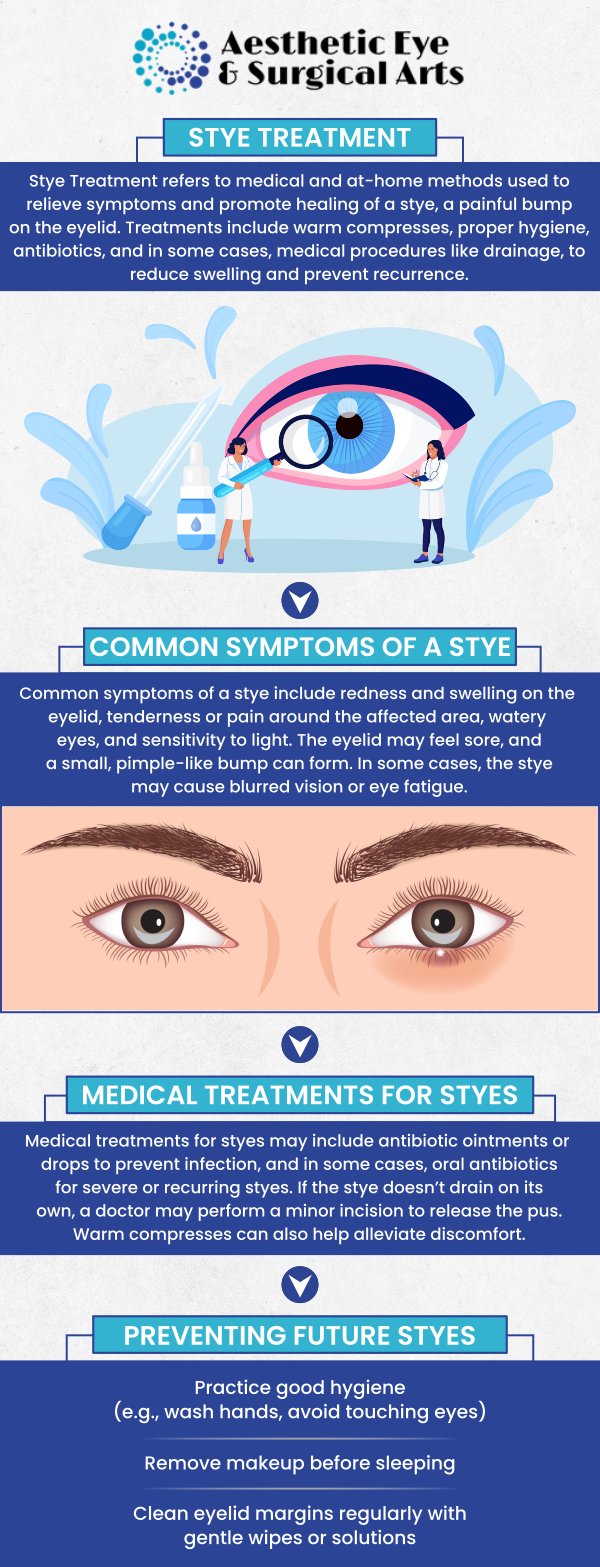
Table of Contents:
Can a stye affect my vision?
How can I tell if I have a stye or a different eye infection?
How long do the symptoms of a stye last?
Can I get a stye on the inside of my eyelid?
Why Dr. Paul Brannon’s Early Diagnosis of Stye Symptoms Leads to Better Eye Health Outcomes
A stye—medically known as a hordeolum—is an infection of an eyelid oil gland that appears as a painful, red bump along the eyelid margin. In most cases, styes do not directly impair vision because the infection is localized to the oil glands or hair follicles at the edge of the eyelid. However, when a stye becomes significantly swollen or inflamed, it can cause discomfort and pressure on the eye surface or eyelid, which may temporarily make vision feel blurry or obstructed. This is especially true if the stye is large or pressing on the eyeball’s surface or if it causes significant swelling that interferes with how the eyelid opens and closes. At Aesthetic Eye & Surgical Arts, Dr. Paul Brannan and his team evaluate styes not only for comfort but also to ensure that any swelling or irritation isn’t impacting eye function or visual clarity. If vision changes or blurriness occur alongside a stye, professional evaluation is recommended to rule out more serious complications or concomitant eye conditions.
Telling a stye apart from other eye conditions comes down to where the bump appears and what symptoms you notice. A stye typically forms as a painful, red, pimple-like bump right along the eyelid margin, especially near the base of the eyelashes, and is usually tender to the touch. Styes often cause localized swelling, redness, and discomfort—sometimes accompanied by a gritty sensation in the eye. By contrast, other eye infections like conjunctivitis (pink eye) involve diffuse redness across the white of the eye, increased tearing, itching, and discharge, but no discrete bump on the eyelid edge. Another common eyelid bump, a chalazion, may appear similar but is usually painless and deeper inside the lid because it involves a blocked meibomian gland without infection. At Aesthetic Eye & Surgical Arts, Dr. Brannan’s team specializes in diagnosing these conditions, using a thorough exam to distinguish a stye from other eyelid bumps or infections and recommending the right treatment.
The course of a stye often follows a predictable pattern, though exact timelines vary from person to person. A stye typically starts as a tender, red bump on the eyelid, gradually becoming more noticeable over a few days as the infection develops. With conservative care—such as warm compresses and proper eyelid hygiene—a stye often begins to improve within a few days and may fully resolve within about one to two weeks. At Aesthetic Eye & Surgical Arts, the emphasis is on both comfort and healing; early intervention helps reduce inflammation and swelling, which can shorten the duration and discomfort of symptoms. If a stye doesn’t show signs of improvement within this time frame, continues to enlarge, becomes excessively painful, or interferes with visual clarity, it’s advisable to see Dr. Paul Brannan or another eye care specialist. Persistent or recurrent styes may require professional treatment or minor procedures to drain or address underlying issues. Avoiding squeezing or trying to pop the stye yourself is crucial, as this can spread infection and potentially lengthen healing time.
Yes — styes can occur both on the outer edge of the eyelid at the base of the eyelashes (external styes) and on the inside surface of the eyelid (internal styes). Internal styes arise when bacteria infect the meibomian oil glands located deeper within the eyelid. While external styes often look like small red bumps, internal styes may be harder to see from the outside and can cause swelling, tenderness, and irritation from within the eyelid tissue. Both types stem from bacterial infection, typically involving common skin bacteria such as Staphylococcus aureus. At Aesthetic Eye & Surgical Arts, Dr. Paul Brannan and his team are experienced in recognizing and treating both external and internal styes, tailoring their approach based on the stye’s location and severity. Internal styes can sometimes feel more uncomfortable because they press into the eyelid and the eye itself. If you notice persistent swelling on the inside of the eyelid, increased discomfort, or any changes in vision, it’s wise to seek evaluation so that appropriate care—whether conservative or procedural—can be provided.
Styes typically present with tenderness, redness, and a visible bump near the eyelid, which may affect vision if left untreated. At Aesthetic Eye & Surgical Arts, Dr. Brannon, M.D., emphasizes the importance of early diagnosis to prevent the condition from worsening. By recognizing symptoms promptly, patients can benefit from quick interventions, reducing the risk of infection or recurrence. Dr. Brannon’s comprehensive treatments focus on minimizing discomfort and promoting long-term eye health, ensuring patients receive the right care at the right time. For more information, contact us today or schedule an appointment online. We are conveniently located at 5310 Clark Rd, Suite 106, Sarasota, FL 34233. We serve clients from Sarasota, FL, Osprey FL, Fruitville FL, Vamo FL, Venice FL, Lakewood Ranch FL, Bradenton FL, and surrounding areas.
Check Out Our 5 Star Reviews



Additional Services You May Need
▸ Styes
▸ Laser
▸ Botox
▸ Facials
▸ Dry Eyes
▸ Brow Lift
▸ Juvéderm®
▸ Cosmetic Offerings
▸ Skin Cancer Surgery
▸ Oculoplastic Surgery
▸ Upper & Lower Blepharoplasty
▸ All Services



 Send Text
 How May I Help You?