
Eyelash Rubbing
Eyelashes may rub directly against the surface of the eye, producing a persistent scratchy or foreign-body sensation.
Aesthetic Eye & Surgical Arts
When the eyelid turns inward and the eyelashes rub against the eye.
Entropion occurs when the eyelid turns inward, causing the eyelashes and skin to rub against the surface of the eye. This can cause irritation, tearing, redness, sensitivity to light, and sometimes damage to the cornea.
Understanding Entropion
The eyelids help protect the eyes and distribute tears across the ocular surface. When the eyelid turns inward, the eyelashes may repeatedly rub against the cornea and conjunctiva.
Symptoms can include a foreign-body sensation, irritation, redness, tearing, discharge, light sensitivity, or blurred vision.
Because persistent rubbing can injure the surface of the eye, entropion should be evaluated even when the symptoms initially seem minor.
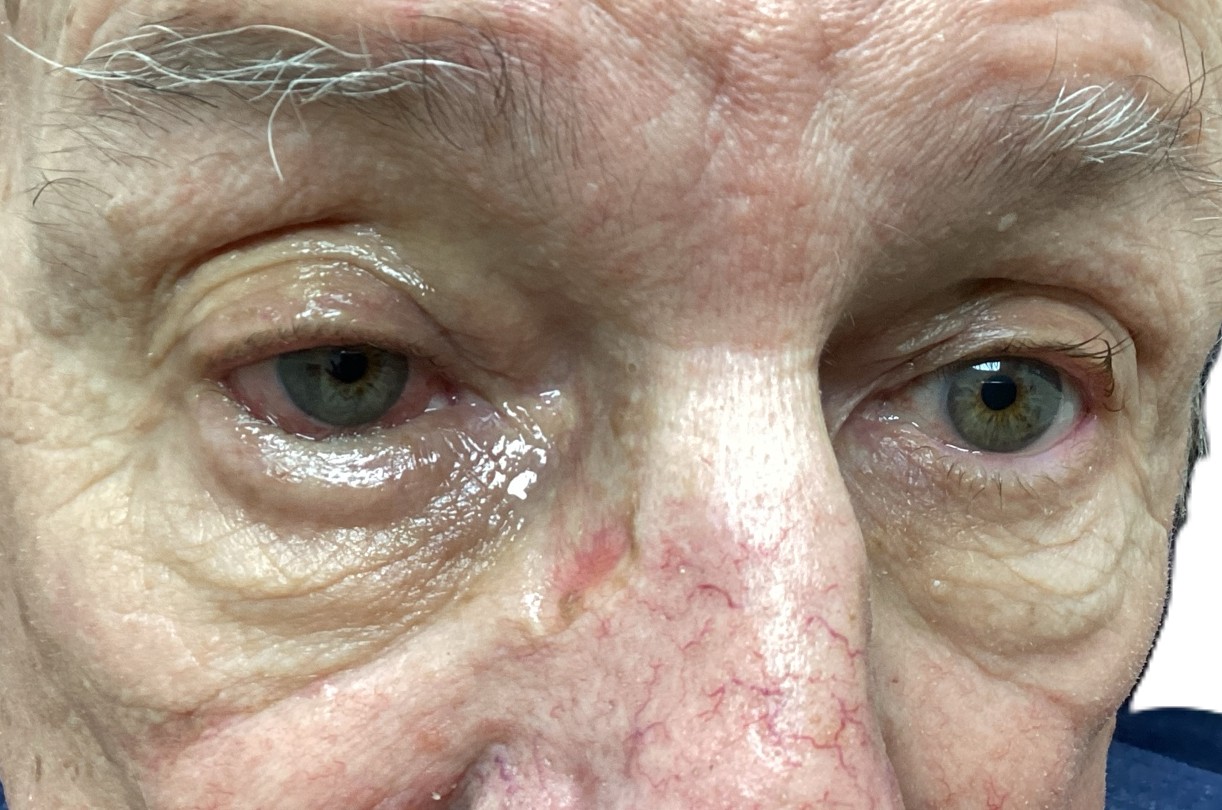
Signs & Symptoms
Eyelashes may rub directly against the surface of the eye, producing a persistent scratchy or foreign-body sensation.
Repeated contact with the eye can cause redness, discomfort, inflammation, and sensitivity.
Eye irritation may stimulate excessive tearing, even though the underlying problem is abnormal eyelid position.
Persistent rubbing can damage the corneal surface and, in more severe cases, threaten vision.
Causes
Entropion most commonly develops as the tissues supporting the lower eyelid loosen or change with age.
Changes in eyelid tension and the muscles that control eyelid position can allow the lid margin to rotate inward.
Less commonly, entropion may be associated with scarring, previous surgery, injury, inflammation, or other eyelid conditions.
Treatment
Temporary measures may sometimes reduce irritation, but they do not necessarily correct the underlying eyelid position.
When surgery is appropriate, entropion repair is designed to restore the eyelid to a more normal position and reduce contact between the eyelashes and the eye.
The specific repair is tailored to the patient's eyelid anatomy, degree of laxity, muscle function, and underlying cause of the entropion.
The goal is a comfortable, stable eyelid that protects the eye and functions naturally.
Most of Dr. Brannan's eyelid procedures are performed in the office, providing a familiar surgical setting for the great majority of patients. When another setting is more appropriate, it is recommended based on the procedure and individual medical needs.
Eye Protection
Correcting the inward position of the eyelid can reduce rubbing, irritation, tearing, and foreign-body sensation.
Persistent eyelash contact can injure the corneal surface. Restoring normal eyelid position helps protect the eye from continued irritation and damage.
Entropion repair is generally performed to restore eyelid function and protect the eye rather than for cosmetic purposes. Insurance coverage depends on the patient's condition, medical necessity, and individual insurance plan.
Specialized Training
Oculofacial plastic surgery combines ophthalmology training with specialized fellowship training focused on the eyelids and surrounding structures.
Entropion repair requires attention not only to eyelid position, but also to eyelid stability, movement, tear function, and protection of the ocular surface.
Preparation & Recovery
Swelling, bruising, and temporary eyelid tightness can occur during the early healing period and gradually improve.
Postoperative ointment and other eye-care instructions are provided as appropriate. Follow-up visits allow the eyelid position, healing, and ocular surface to be monitored.
Most patients gradually return to normal activities as healing progresses, although recovery varies according to the procedure performed and the individual patient.
View Preparation & Recovery Guide →Our Approach
Frequently Asked Questions
Entropion is an inward turning of the eyelid that causes the eyelashes or eyelid skin to rub against the surface of the eye. It most commonly affects the lower eyelid.
Symptoms may include irritation, redness, tearing, a scratchy or foreign-body sensation, light sensitivity, discharge, and blurred vision.
Yes. Persistent rubbing of the eyelashes against the eye can injure the corneal surface. More significant corneal damage can potentially affect vision.
Age-related changes in eyelid support are common causes. Entropion can also occur because of scarring, inflammation, previous surgery, injury, or other eyelid conditions.
Not necessarily. Treatment depends on the cause, severity, symptoms, and condition of the ocular surface. Some temporary treatments can relieve symptoms, but surgery may be recommended when correction of the eyelid position is needed.
Entropion repair may be considered medically necessary when appropriate clinical criteria are met. Coverage and documentation requirements vary by insurance plan.
The primary purpose of entropion repair is to restore a more normal eyelid position and protect the eye. Changes in appearance are generally related to correcting the abnormal inward position.
Swelling and bruising are common early in recovery and generally improve with time. The exact recovery period depends on the repair performed and the individual patient.
Recurrence is possible because eyelid tissues continue to change over time. The likelihood depends on the underlying cause, anatomy, and type of repair.
Aesthetic Eye & Surgical Arts
Persistent irritation, tearing, or eyelashes rubbing against the eye may be caused by entropion. A careful eyelid examination can determine the cause and whether treatment is appropriate.