

You cannot copy content of this website, your IP is being recorded
What Is a Stye?

What is a Stye and How Can You Treat It?

At Aesthetic Eye & Surgical Arts in Sarasota, Dr. Paul Brannon provides specialized care to treat styes, which are common, painful bumps that form on the eyelid. Styes are typically caused by bacterial infections in the eyelash follicles or oil glands. Dr. Brannon uses a variety of treatments to reduce inflammation, speed up healing, and prevent future occurrences, offering personalized care to ensure the best results. For more information, contact us today or schedule an appointment online. We are conveniently located at 5310 Clark Rd, Suite 106, Sarasota, FL 34233.
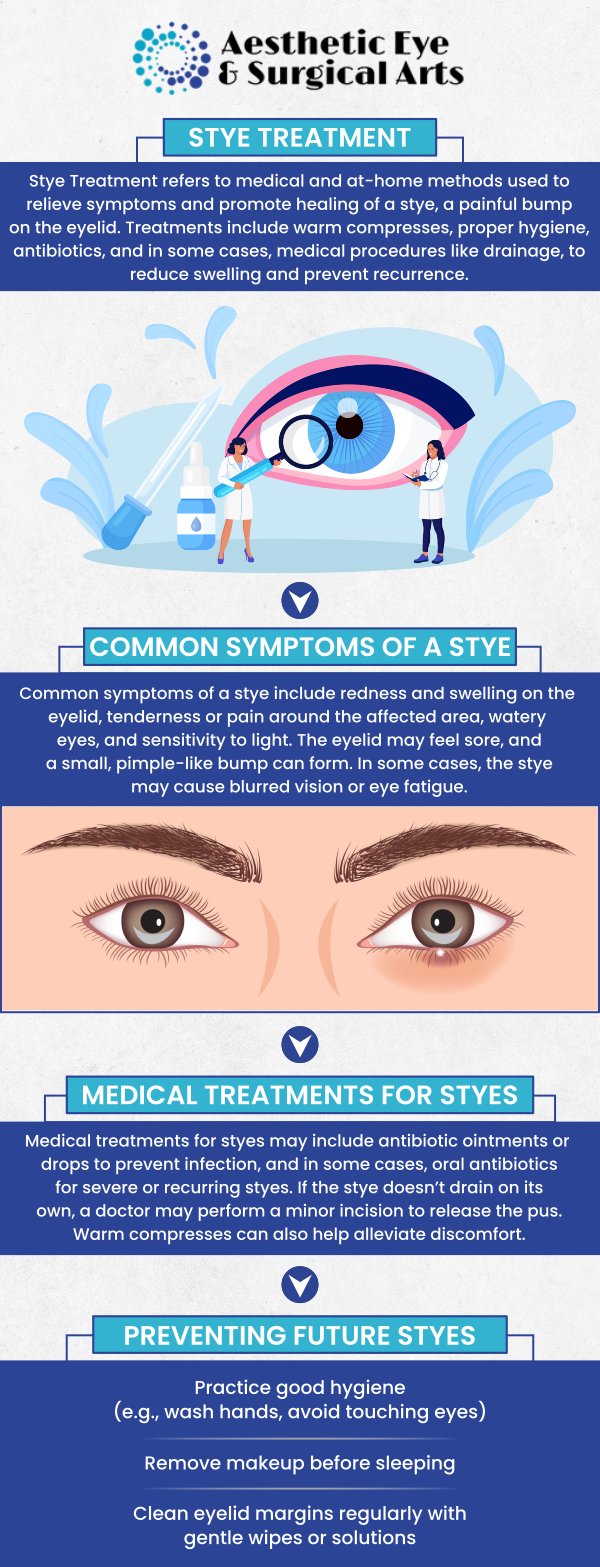
At Aesthetic Eye & Surgical Arts in Sarasota, Dr. Paul Brannon provides specialized care to treat styes, which are common, painful bumps that form on the eyelid. Styes are typically caused by bacterial infections in the eyelash follicles or oil glands. Dr. Brannon uses a variety of treatments to reduce inflammation, speed up healing, and prevent future occurrences, offering personalized care to ensure the best results. For more information, contact us today or schedule an appointment online. We are conveniently located at 5310 Clark Rd, Suite 106, Sarasota, FL 34233.

Table of Contents:

What exactly is a stye?
When should I seek medical attention for a stye?
Can styes be prevented?
Are styes contagious?
Effective Stye Treatment with Dr. Paul Brannan, MD

What exactly is a stye?

A stye, medically referred to as a hordeolum, is a small, red, painful bump that forms on or near the edge of the eyelid. It results from a bacterial infection of an eyelash follicle or one of the tiny oil glands (Meibomian glands) along the eyelid. At Aesthetic Eye & Surgical Arts in Sarasota, FL, many patients ask about styes because they can be sudden, uncomfortable, and confusing.

Styes typically start as a tender area along the eyelid that becomes swollen and filled with pus as the gland becomes blocked and infected. They can appear on either the outer surface of the eyelid or inside the lid itself. Although styes are often mistaken for chalazia (which are similar but not infected), styes tend to be painful, red, and acute in onset due to bacterial activity.

They occur because oil glands in the eyelid become clogged, allowing bacteria, usually Staphylococcus, to multiply. This triggers inflammation and a localized collection of pus, creating the bump you see and feel.

While a stye may be alarming when it first appears, it is usually a benign and self‑limiting condition, meaning it often resolves on its own with proper care.

When should I seek medical attention for a stye?

Most styes will resolve with home care within 5–10 days, but there are important signs that indicate you should seek professional evaluation from a provider such as Dr. Paul Brannan, MD, at Aesthetic Eye & Surgical Arts.

You should seek medical attention if:

The stye gets significantly larger or more painful: If swelling or pain intensifies rather than subsides after a few days of warm compresses, it may require professional intervention.

● Vision becomes affected: Blurry or obstructed vision can signal pressure from the swelling or involvement of deeper eyelid structures.

● Symptoms spread beyond the eyelid: If redness, warmth, or swelling extends toward the cheek or eyeball, this may indicate a broader infection.

● The stye persists longer than expected: If there’s little improvement after a week, the bump may be a chalazion or another eyelid lesion requiring a different treatment approach.

● Repeated styes occur: Frequent styes can signal underlying issues such as chronic eyelid inflammation, blepharitis, or blocked oil glands.

In these cases, a clinical exam helps ensure the right treatment plan is chosen — whether that is drainage, prescription medication, or evaluation for related eyelid conditions.

Can styes be prevented?

Yes—while not all styes can be completely prevented, good eyelid hygiene and smart habits can significantly reduce their occurrence. Styes often result from bacteria entering and infecting an oil gland, so preventive care focuses on minimizing bacterial buildup and gland blockage.

Helpful preventive measures include:

● Clean eyelids regularly: Gently cleansing the eyelid margin with a mild eyelid scrub or diluted baby shampoo can remove debris and oil buildup that can plug glands over time.

● Remove eye makeup thoroughly: Leftover makeup can trap bacteria near hair follicles and oil glands, increasing the risk of a stye.

● Avoid touching your eyes with unclean hands: Hands carry a significant amount of bacteria. Washing hands before touching your eyes can reduce transmission.

● Replace old makeup: Mascara and eyeliners can harbor bacteria. Regularly replacing eye makeup products helps minimize exposure.

● Warm compress routine: For individuals prone to styes or blepharitis, applying warm compresses on a regular basis can keep oil glands from clogging.

These habits also contribute to overall eyelid and ocular comfort, and in many cases, they help reduce the frequency of stye and chalazion formation.

Are styes contagious?

Styes are not contagious in the same way a cold or flu is, but the bacteria that cause them, usually Staphylococcus, can spread if hygiene practices are poor.

Here’s what to know:

● You cannot “catch” a stye by being near someone who has one.

● However, the bacteria that cause styes can be transferred from one surface to another if someone touches their infected eyelid and then touches another person or surface without washing their hands.

For this reason, good hygiene is key: avoid touching or rubbing the affected eye, wash hands frequently, and do not share towels, makeup, or anything that comes into close contact with the eyes.

If a stye bursts or drains, keeping the area clean and resisting the urge to touch it prevents bacteria from spreading to other parts of the eyelid or to other people. Using clean washcloths and only wiping gently can maintain good eye hygiene.

Effective Stye Treatment with Dr. Paul Brannan, MD

At Aesthetic Eye & Surgical Arts in Sarasota, FL, Dr. Paul Brannon provides compassionate care for styes and other eyelid concerns. While most styes resolve with careful home care, persistent or complicated cases benefit from professional evaluation and treatment. If you’re experiencing a stye that persists, causes significant discomfort, or keeps coming back, consulting with Dr. Paul Brannan, MD, can help you find relief and a plan that supports your eye health for the long term. For more information, contact us today or schedule an appointment online. We are conveniently located at 5310 Clark Rd, Suite 106, Sarasota, FL 34233. We serve clients from Sarasota, FL, Osprey FL, Fruitville FL, Vamo FL, Venice FL, Lakewood Ranch FL, Bradenton FL, and surrounding areas.